

Asset Tagging
RDrive brings structure and traceability to asset tagging, providing a digital asset tagging platform that makes it easier to capture, verify, and manage asset data during delivery or after installation – without disruption or rework.
Tag. Verify. Operate.
Build a complete, trusted asset register during delivery or retrospectively – without rework, duplication, or disruption.
Flexible Capture
Tag assets at installation or retrospectively during surveys and inspections, using the same consistent process.
Complete Coverage
Use RDrive Progress Monitoring to track known assets or ensure every area is inspected and assets are identified and tagged ad hoc.
Trusted Asset Data
Link each unique tag to location, photos, documentation, inspections, and commissioning evidence – proving assets exist and are operationally ready.
CAFM-Ready Handover
Export asset data in a format aligned to your CAFM system, enabling a seamless transition from project delivery to operations.
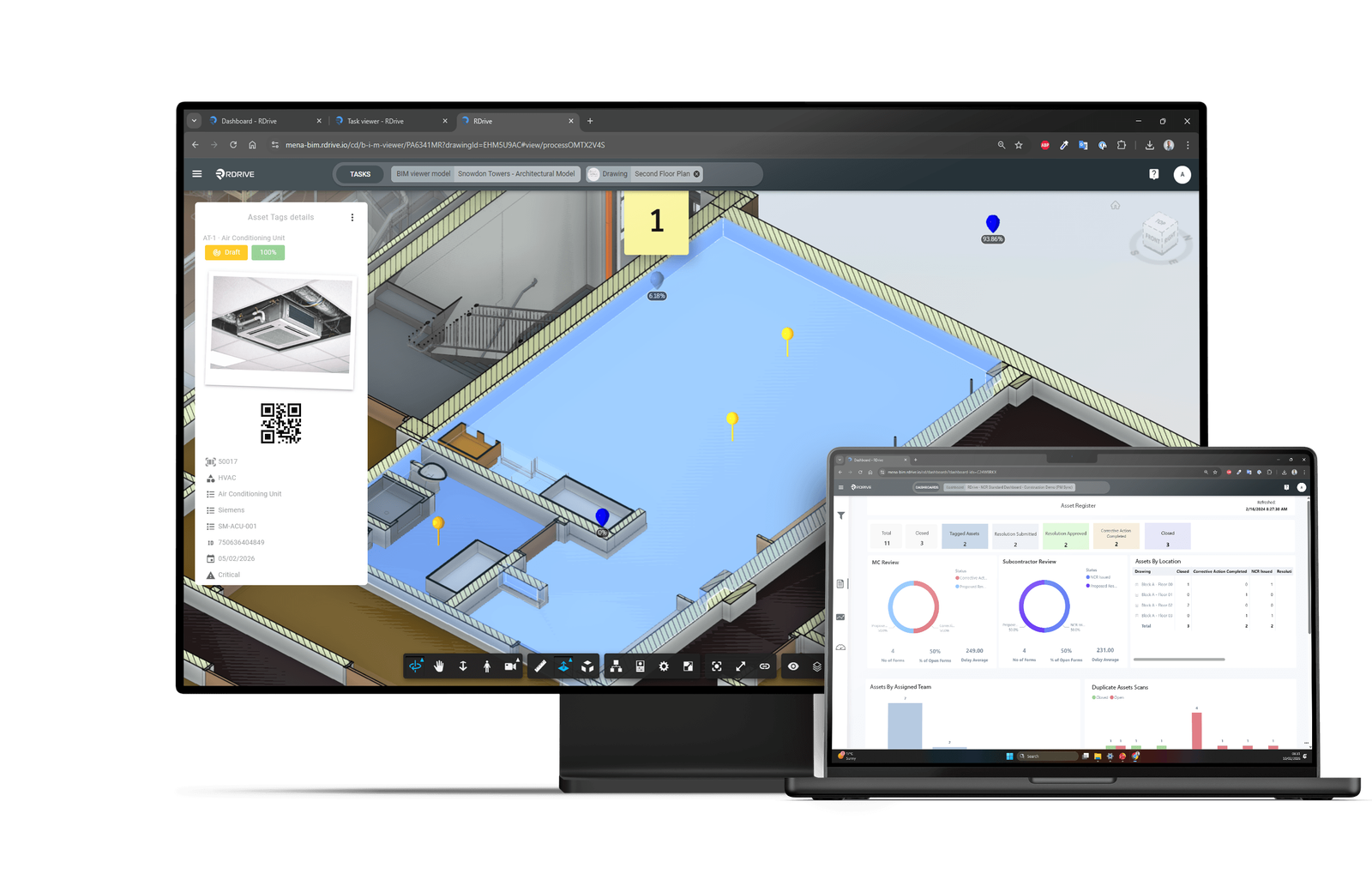
How it works
Define the tagging approach
Use RDrive Progress Monitoring to define how asset tagging will be managed on the project. Where assets are known, create a structured list to track tagging of each asset. Where assets are unknown, define areas to ensure all spaces are inspected and assets are identified and tagged ad hoc.
Apply unique asset tags
Apply pre-generated QR or barcode tags to assets during installation, inspection, or retrospective surveys. Each tag provides a unique identifier that forms the backbone of the asset record.
Link asset data digitally
Once a tag is applied, link all relevant asset information in RDrive – including location, photos, documentation, inspections, and commissioning data – directly to that unique tag.
Track progress and completeness
Use dashboards to monitor tagging progress across assets or areas. Instantly see what has been tagged, what remains outstanding, and where coverage gaps exist.
Export for operations
At handover, export asset data in a structure aligned to your CAFM system’s asset library and import requirements, enabling a smooth and predictable transition into operations.